Review: Floral Woman Line Art SVG for Embroidery
As a designer who spends half her life staring at stitch density charts and the other half trying to sell handmade goods online, I don’t just look at a design file; I look at how it will survive the hoop. When I first pulled up Floral Woman Line Art SVG, my initial reaction was one of cautious optimism. The concept is undeniably strong—feminine, botanical, and clean—but in the world of machine embroidery, "clean" can sometimes mean "tricky." This review breaks down exactly where this design shines, where it might frustrate you, and whether it belongs in your commercial product line or your personal gift stash.
The First Impression: Mood and Visual Personality
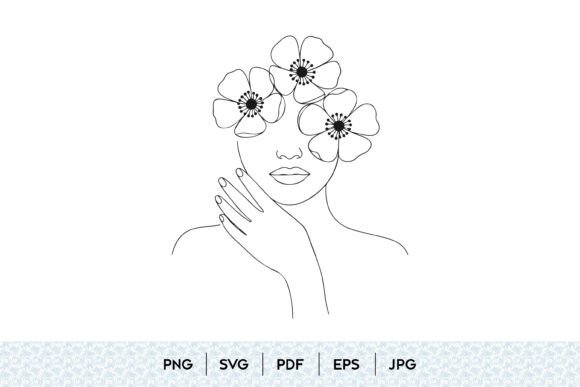
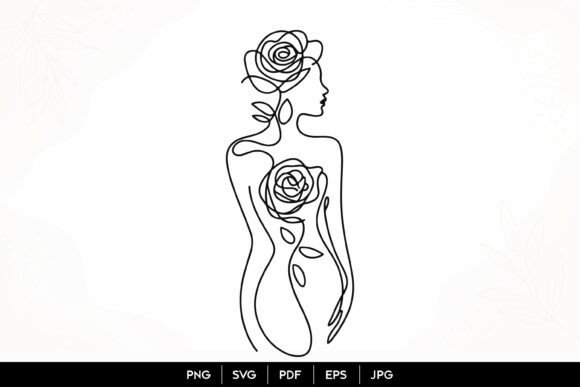
The moment you open the file, the aesthetic speaks for itself. It is not cluttered. It does not rely on heavy fill stitches to create visual weight. Instead, it leans entirely into the elegance of continuous line art. For those unfamiliar with this style, think of a single, unbroken stroke that weaves through petals, leaves, and the subtle curve of a woman’s profile. This creates a sophisticated, airy feel that stands out against busy fabric textures.
In terms of mood, this design feels like a quiet morning coffee or a delicate wedding favor. It is soft but structured. The inclusion of rose elements and botanical accents grounds the feminine silhouette in nature, making it versatile enough for spring collections, nursery decor, or even minimalist bridal gifts. It doesn’t scream for attention; it invites the viewer to lean in closer to appreciate the flow of the lines. That is a powerful trait for a handmade product because it suggests quality rather than quantity.
Real-World Application: Where This Design Fits Best
I took this design through several mental simulations of real-world use cases before forming a final verdict. Here is how Floral Woman Line Art SVG performs in practical scenarios:
- Tote Bags and Canvas Totes: This is perhaps the strongest use case. The simplicity of the line art contrasts beautifully with the rougher texture of canvas. A single-color thread (like cream or black) on a natural or black tote bag would look incredibly chic. It elevates a basic accessory into a boutique item.
- Sweatshirt Embroidery: Placed over the heart or centered on the back of a heather grey sweatshirt, this design offers a modern, streetwear-meets-luxe vibe. Because it uses minimal fill, it won’t weigh down the fabric or cause puckering, which is a common complaint with heavy floral designs on knit fabrics.
- Baby Embroidery: The gentle curves make this suitable for baby onesies or burp cloths. However, caution is needed here regarding scale (discussed below). It fits perfectly into the current trend of gender-neutral, minimalist nursery aesthetics.
- Embroidered Patches: If you are selling patches on Etsy, this design has high recognition potential. The clear outline makes it easy to digitize with a clean edge, and it translates well to both woven and embroidered patch formats.
- Kitchen Towels and Aprons: For the home decor market, this adds a touch of elegance to functional items. Imagine it stitched onto a linen apron in a contrasting thread color. It signals that the maker cares about detail.
The Critical Analysis: Stitching Challenges and Limitations
No design is perfect, and as an experienced reviewer, I need to highlight where this embroidery project might encounter friction. The very thing that makes this design beautiful—its reliance on fine lines—is also its biggest vulnerability.
Small Hoop Sizes: You cannot shrink this design too much. If you attempt to fit the full composition into a 4x4 inch hoop, the details will merge into a muddy blob. The eye needs space to follow the continuous line. I recommend using a medium to large hoop size to preserve the integrity of the face and flower details. If you try to force it into a tiny area, you lose the "one line drawing" effect.
Fabric Texture and Stability: This design demands a stable base. On highly textured fabrics like chunky knits or raw denim without proper stabilization, the thin lines may get lost or wobble. Furthermore, on stretchy fabrics like jersey t-shirts, you must use a cut-away stabilizer to prevent the delicate lines from distorting during washing. If the fabric stretches, the straight lines of the woman’s profile will warp, ruining the illusion of continuous art.
Thread Color Contrast: While the design works best in monochrome, be careful with low-contrast thread choices. A light beige thread on a cream shirt will disappear. To maintain the sharpness of the running stitch or satin edges, high contrast is your friend. Black on white, navy on grey, or burgundy on tan are safe bets.
Stitch Density and Technique Considerations
Because this is primarily a line-art piece, it likely relies heavily on running stitch or a very narrow satin stitch. As a designer, I advise checking the digitization for underlay stitches. Without proper underlay, these fine lines can pull and pucker. Also, consider the direction of the stitching. In some areas, a satin stitch might provide a sharper definition for the eyes or lips, while the hair and flowers should remain as flowing lines.
If you are planning to use this for commercial embroidery, you must decide if you want to add any filler. Some designers add subtle French knots for flower centers to give the eye a focal point. Others leave it purely linear. Both approaches work, but they change the final value of the finished product.
Product Value and Customer Appeal
From a business perspective, why would a customer buy this? The answer lies in the perception of craftsmanship. A complex, multi-colored floral bouquet can look mass-produced. A clean, expertly executed line art portrait looks bespoke. This design allows small shop owners to charge a premium because it signals precision.
It is highly giftability-focused. Whether it is a birthday gift, a wedding favor, or a mother’s day present, the personalization potential is high. Adding a name in a simple script nearby complements the artwork without competing with it. For Etsy sellers, this design is excellent for creating printable mockups. The clean lines photograph well, making your listing images pop on social media platforms like Pinterest and Instagram.
Practical Designer Notes Before You Stitch
Before you commit this embroidery file to production, follow these steps to ensure success:
- Test on Scrap Fabric: Never run a new design directly onto your final garment. Use a scrap piece of the same fabric type to check for tension issues and stability.
- Check Thread Colors: Lay your actual threads next to the digital preview. Sometimes colors look different on screen than they do in polyester or rayon thread.
- Inspect Small Details: Zoom in on the face and flower intersections. Are there any overlapping lines that might cause the needle to break or the thread to tangle?
- Confirm Licensing: Ensure you have the correct rights for commercial use if you plan to sell the finished items. Check the license terms provided with the digital product.
- Use Proper Stabilizer: Match your stabilizer to your fabric. Tear-away for wovens, cut-away for knits and stretchy materials.
- Black and White Mockup: View the design in grayscale to ensure the composition holds up without the distraction of color.
Final Verdict
Floral Woman Line Art SVG is a refined, professional asset that rewards careful execution. It is not a "throw-it-in-the-hoop-and-forget-it" design; it requires respect for hoop size and fabric choice. However, when done correctly, the result is stunning. It bridges the gap between digital illustration and tactile craft, offering a timeless aesthetic that appeals to modern buyers looking for understated elegance. If you are a craft business owner or a dedicated hobbyist looking to add a touch of sophistication to your repertoire, this design is a worthy addition.